
Skip to the book

Contents

  1. Frontispiece I the perfume, the bottle, the 180 days
  2. Compose a scent of your own II choose three notes and watch the glass take their colour
  3. Provenance III where each plant was picked, and what we measured
  4. The ritual IV four slow steps from field to flacon
  5. Try a sample set V three 2 ml vials, written for by letter
  6. Colophon VI how this book was made

Aetheria Botanicals is a fictional atelier designed by HVNF Studios as a portfolio sample. Nothing here is for sale.

Aetheria

botanical perfumery · Grasse

Perfume made from wild plants, steeped in the cold for 180 days.

Small batches, picked by hand at dawn and bottled in our Grasse atelier.

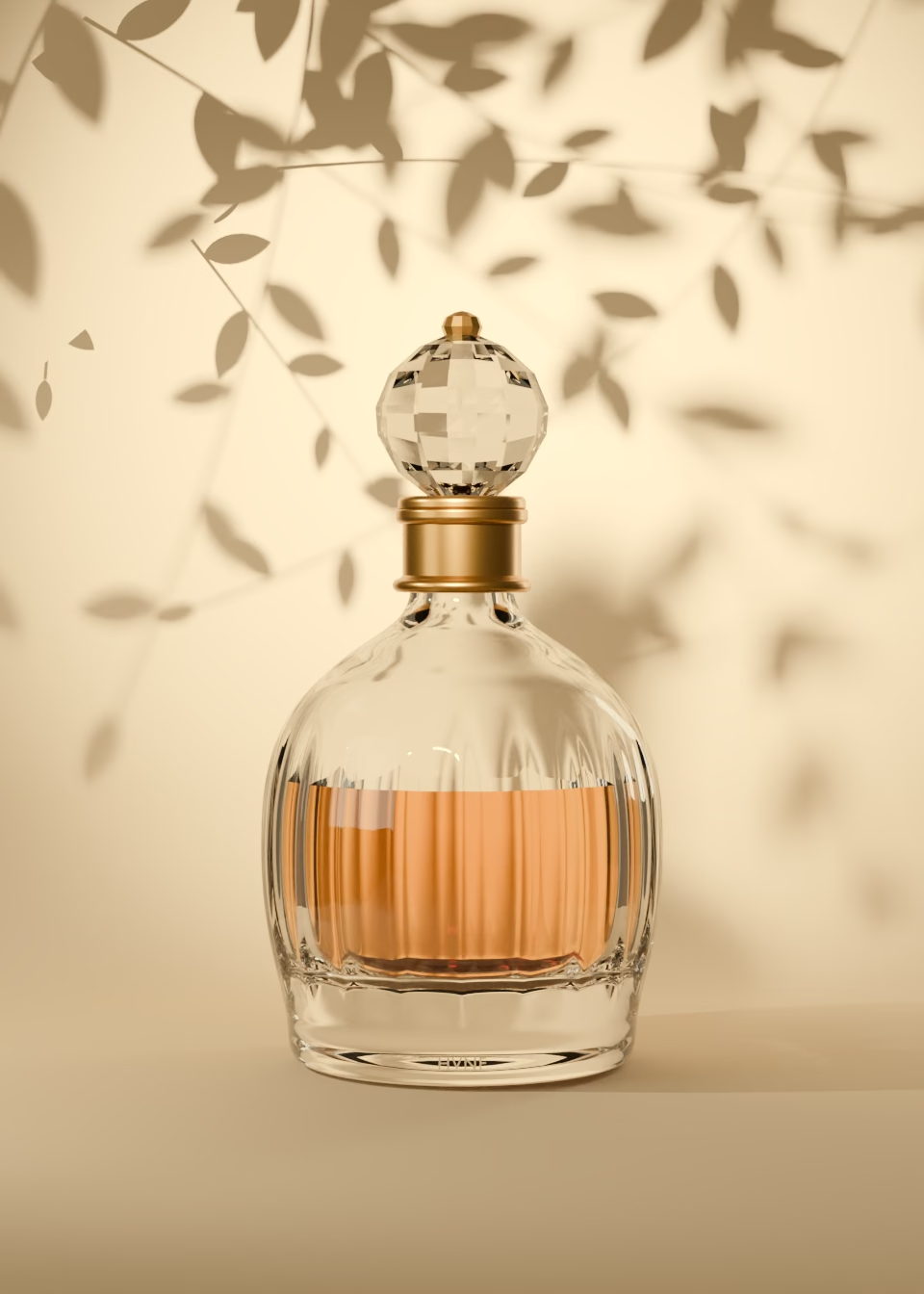
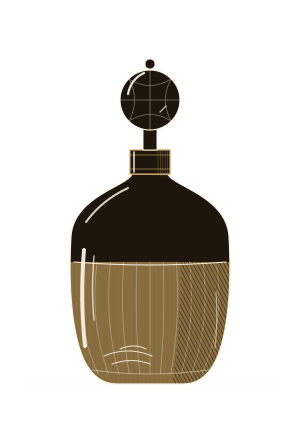
A fluted crystal perfume bottle with a brass collar and a cut-glass stopper, two-thirds full of amber perfume, standing in an arched niche in soft window light.

Plate I · drawn for Aetheria

No. 019, 50 ml · €185; Sample set, three 2 ml vials · €24

A portfolio sample · © 2026 HVNF Studios · do not redistribute

Compose a scent of your own

Choose one note for each layer of the perfume: the first impression, the heart, and the base that lingers. Set how strongly each one speaks, and the bottle beside you takes the colour of what you make.

Nine wild tinctures, drawn cold over months. Twenty-seven ways to wear them.

Or begin from one of ours:

Top note

the first impression

Bright and fleeting. Gone within the hour.

Choose the top note

Knotted mountain fruit, sharp as frost on a windowpane.

present · 55%

Heart note

the character

Rises once the brightness fades, and stays the afternoon.

Choose the heart note

Roots dried over a slow fire, earthen and dusky.

speaks clearly · 70%

Base note

what lingers

The quiet foundation, still on the skin the next morning.

Choose the base note

Cool stone and deep shade, the floor of an old wood.

speaks clearly · 60%

Heavier layers carry further: base notes count 1.2 times, top notes 0.85. All figures are illustrative.

your formula

Composition 010

yuzu, vetiver & moss

Plate II · your formula, poured for Aetheria · © 2026 HVNF Studios · do not redistribute

in a hundred parts

top 25 · heart 37 · base 38

Rest it 120 days in a clay amphora before it is poured.

verdant citrus36floral12dry woody42resinous smoke32earthy moss56sweet balsam15
Mostly earthy moss, then dry wood and green citrus.

Try this as a sample set

Provenance

Every batch begins in one place, at one altitude, on one morning.

One flacon of No. 019, fluted crystal with a brass collar and amber perfume, standing alone under a single light.

Turn the pages to see where each plant was picked, and what we measured when it reached Grasse.

herbarium · ae-019-01

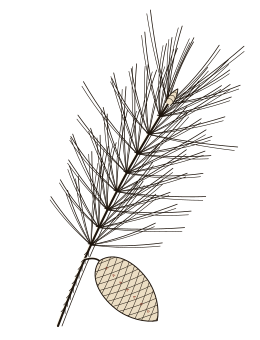
Pressed specimen drawing of High-Altitude Maritime Pine, Pinus pinaster.

Pinus pinaster

Peloponnese, Greece

Plate III · lot 01, pressed for Aetheria · © 2026 HVNF Studios · do not redistribute

RECEIVED IN GRASSE · LOT AE-019-01 · AETHERIAVX-0624-PP24 JUN 2026

1 of 3

lot 01

High-Altitude Maritime Pine

Pinus pinaster

Peloponnese, Greece · 37.51° N, 22.37° E · 1,420 m above the sea

Scattered stands on thin limestone scree, facing the Argolic Gulf. Sea air rises every afternoon and leaves salt on the needles.

Picked over one week in late June, between 05:40 and 08:10. Received in Grasse on 24 June 2026, entry VX-0624-PP.

It smells of green resin, salted needle and warm stone.

“Cut only the new growth, before the sun warms the resin. By nine the ridge smells of hot stone instead.”

field note, harvest team

distillation

34 °C

Far below a kitchen simmer. The plant is coaxed, never cooked.

Cold vacuum distillation, kept low so the brightest notes survive the still.

soil pH

5.6

acid · 0neutral · 7alkaline · 14

Measured in the root zone on the morning of harvest.

sun a year

2,840 h

dawndusk

74% of that light reaches the plants through slope and canopy.

altitude

1,420 m

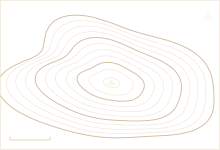
Contour study around the harvest point

summit at 1,420 m · the bar is about 500 m

The rules we forage by

  1. We never take more than a third of any wild stand, and we always leave the roots.
  2. We only harvest land we have walked with the people who tend it.
  3. Every plant is weighed, dated and traced to its hillside in the ledger.
  4. Maceration runs cold and slow: 180 days, with no heat applied.
  5. Spent botanicals return, as compost, to the soil they came from.

Four slow steps from field to flacon

Every plant is picked by hand at dawn, frozen within the hour, steeped cold for six months, then filtered by gravity alone. Nothing is heated and nothing is rushed, so the scent keeps the shape it had in the field.

the terraces, at first light

Picked by hand at dawn

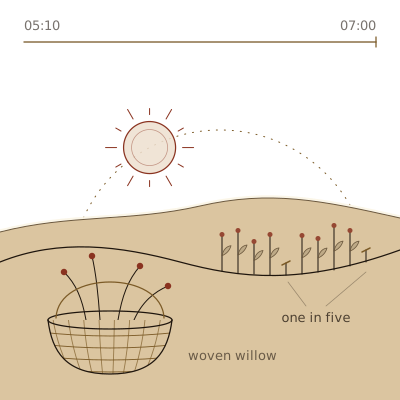
We walk the terraces before the sun clears the ridge, while the petals still hold the night’s cool and their oils sit closest to the surface. One stem in five is taken; the rest are left to seed next year’s field. Everything is carried out in baskets of woven willow, never sacks, so nothing bruises on the way down.

hand foraging
the press room, in the morning

Frozen, then pressed by hand

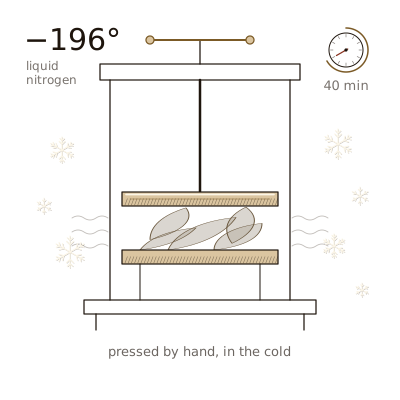
Within forty minutes of the last cut, the harvest is flash-frozen in liquid nitrogen so the fragile top notes cannot drift away as warmth. Two chilled steel plates then close slowly by hand, cracking the frozen cells open without the heat a mill would add.

cryogenic nitrogen pressing

the cellar, for six months

Steeped in the cold for six months

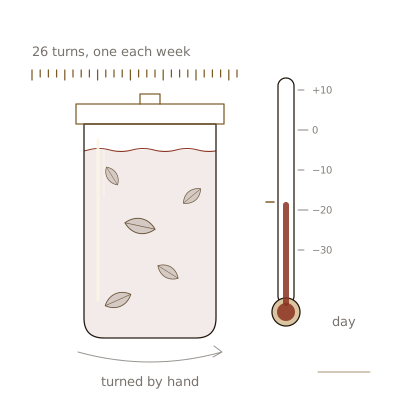
The pressed botanicals rest in grain alcohol held just below freezing, in sealed glass vessels in the cellar. The cold keeps the bright green edges intact while the scent slowly gives itself up. Once a week, every vessel is turned by hand, for six months.

sub-zero cold alcohol maceration

the bottling table, drop by drop

Filtered by gravity into glass

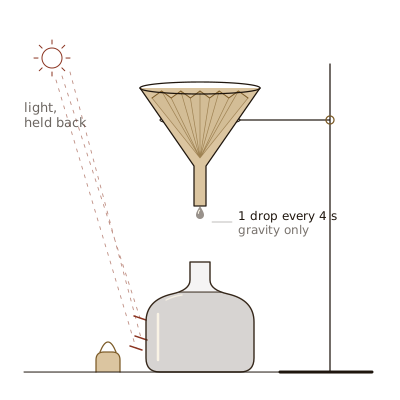
The finished extract finds its own way down through folded paper, one drop at a time. It falls straight into fluted crystal, stoppered at once and kept from the light that would dull it over the years.

gravity filtration

Line drawing of the sun rising along a dotted arc over a hill line, with wild stems on the slope and a woven willow basket of cut stems in the foreground.

Plate IV·i, the dawn harvest · drawn for Aetheria · © 2026 HVNF Studios · do not redistribute

Line drawing of a hand-turned press closing two plates over frozen petals, with six-armed frost stars forming around it and a small clock marking forty minutes.

Plate IV·ii, the frost press · drawn for Aetheria · © 2026 HVNF Studios · do not redistribute

Line drawing of a lidded glass vessel slowly filling with liquid and suspended leaves, beside a thermometer reading minus eighteen degrees and a counter rolling from day zero to day one hundred and eighty.

Plate IV·iii, the long steep · drawn for Aetheria · © 2026 HVNF Studios · do not redistribute

Line drawing of a funnel lined with folded filter paper, releasing slow single drops into a glass flacon that fills as the light is held back.

Plate IV·iv, gravity filtration · drawn for Aetheria · © 2026 HVNF Studios · do not redistribute

No. 019, the finished flacon

Try a sample set

Write to us, and we’ll pour three small vials of what you made.

Dear Aetheria,

Please pour three small vials of No. 019, the house scent of vetiver & smoked birch (change it) for me to wear for a week. If it suits me, I’ll ask for a flacon of my own.

My name is and you can write to me at .

Please letter the tag with .

With thanks,